




BACK FREE CHARTS GET YOUR FREE RECENT FORECASTS MORE INFO CONTACT US

See how VantagePoint Software can predict the Lean Hogs Trading market with up to 86% accuracy* - Get Free Trading Predictions now.

First Name 
Last Name 
Phone 
Email 


The information you submit is confidential and will never be shared with any outside parties.


You Can Also Call Us At
1-800-732-5407

Mention priority code leaninfo to speak with a representative who will provide you with FREE recent VantagePoint predictions.

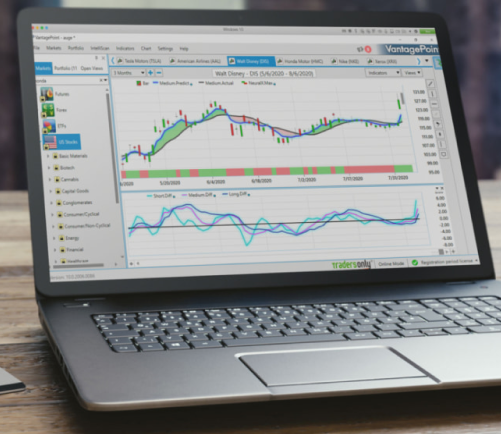
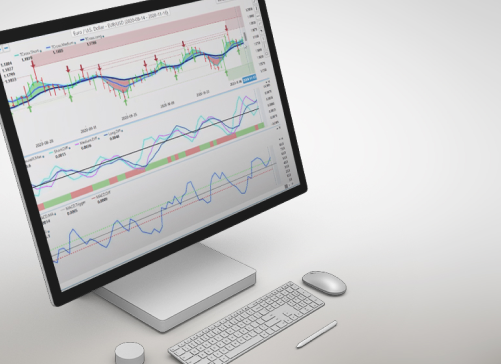
VantagePoint combines intermarket analysis and predicted technical indicators such as predicted moving averages, predicted RSI, predicted Stochastics, and many other predicted indicators that help you forecast where the markets are headed.


We're so confident in our program's accuracy, we want you to see free actual forecasts for the markets of your choice so you can see for yourself.


Lean Hogs Trading

lean hogs trading secrets

Lean Hogs Trading Defined and Explained

Lean hog futures trade at CME Group in the livestock futures complex, which also includes live cattle, feeder cattle and pork belly futures. The standard trading unit for lean hog futures is 40,000 pounds. One trading point equals $0.01 per hundred pounds or $4.00 per point. Minimum price fluctuations are in multiples of $0.00025 per pound, or $10.00 per tick. Contract months are February, April, June, July, August, October and December.

Lean hog futures contracts are cash-settled to the CME Lean Hog Index, a two-day weighted average of United States Department of Agriculture (USDA) cash prices for producer-sold swine or pork market formula transactions.

Lean Hogs Prices/Rates

Lean hog futures trade at CME Group in the livestock futures complex, which also includes live cattle, feeder cattle and pork belly futures. 

  • The standard trading unit for lean hog futures is 40,000 pounds.

  • One lean hog trading point equals $0.01 per hundred pounds or $4.00 per point.

  • Minimum price fluctuations are in multiples of $0.00025 per pound, or $10.00 per tick.

  • Contract months are February, April, June, July, August, October and December.

Lean hog futures contracts are cash-settled to the CME Lean Hog Index, a two-day weighted average of United States Department of Agriculture (USDA) cash prices for producer-sold swine or pork market formula transactions.

Lean Hog Trading Fundamentals

Most U.S. hog production occurs in the Midwest near the source of hogs main feed supplies, corn and soybean. The largest hog producing states are Iowa, North Carolina, Minnesota and Illinois.

Normally, it takes about six months from the time of birth for a pig to reach slaughter weight of 230-260 pounds. At 250 pounds live weight, a hog will yield 88-90 pounds of lean pork consisting of about 20-21 percent each for ham and pork loin, 14 percent for the pork belly or bacon cut, 3 percent spare ribs, 7 percent Boston butt roast and blade steaks and 10 percent picnic. The jowl, fat and other trimmings are used in a variety of meat products and the hide for leather. Everything on the hog is used except for the squeal, according to one expression.

Lean Hog Trading Fundamentals

Hog prices seasonally tend to be highest between May and July when the number of market hogs is usually the lowest and meat distributors are starting to accumulate supply for the bacon-lettuce-tomato sandwich season and for freezer storage for the winter.

See how VantagePoint Software can predict the lean hog market with up to 86% accuracy* - Get your free lean hog report now.

Lean Hogs Trading Tips

Lean hog futures traders need to watch the price of corn because that is the main ingredient in hog feed rations. If the price of corn rises substantially, hog producers will be more inclined to take their hogs to market at lower weights to reduce high feed costs. That typically causes lean hog futures prices to decline initially as more supply becomes available, but it eventually should result in a smaller hog herd, lower pork supply and higher prices.

The relationship of lean hog and corn prices is so intertwined that a lean hog futures trader can monitor the hog-corn ratio to get a simple but sound indication of developments in hog production. This ratio just divides the price of lean hog futures by the price of corn futures. In the past, the dividing line for the hog-corn ratio was about 14 a ratio larger than 14 would encourage hog producers to increase hog numbers and a ratio less than 14 would be likely to cause hog producers to decrease hog numbers. That dividing line in recent years has gotten closer to 18-20, as more than 40 percent of total U.S. hog production is now on a contract basis where the producer now just provides the labor for a large commercial hog operation that doesnt have the same flexibility to adjust numbers as the individual hog producers of the past did.

Lean Hog Trading Information

The major report for the lean hog futures trader is the Hogs and Pigs report released by USDA near the end of each quarter. The report includes data on the size of the total U.S. hog herd, the size of the pig crop, a breakdown of market hog numbers into several weight categories, the size of the breeding herd, the number of sows farrowed in the previous months, pigs per litter and hog producers farrowing intentions for the coming months.

The lean hog futures trader should also be closely monitoring the CME Lean Hog Index, a two-day weighted average of cash prices. Beginning in 2003, the cash prices used in the index became the average net prices at the average percent lean for slaughtered hogs. USDA releases these price reports and other data daily.

USDA provides a number of other reports of interest to lean hog futures traders including daily slaughter totals and the monthly Livestock Slaughter report, which presents statistics on total hog slaughter by head, average live and dressed weight in commercial plants by state and in the United States and other slaughter data.
Several reports published by USDAs Economic Research Service, including Livestock, Dairy and Poultry Situation and Outlook and Red Meat Yearbook, give data on imports and exports of lean hogs, offering monthly, quarterly, and yearly statistics that are separated out by selected countries by carcass weight and live animal elements.

Extension services in a number of hog-producing states also provide a large amount of material on all phases of hog production and on the economics of the hog industry.

Lean Hog Trading Strategy

All of the numbers contained in the Hogs and Pigs report make if possible for the lean hog futures trader to calculate the amount of pork supplies in the future by analyzing the breakdown of market hogs by weight and add estimates of how long it will take these market hogs to reach the weight at which they will be sent to the packing plant. Deviations from the percentage change in hog numbers and the percentage change in slaughter figures from the previous year may indicate that there was some error in the estimates or that the numbers of hogs are being increased or decreased for economic reasons.

The number of newborn pigs should also help the lean hog futures trader gauge the amount of hog slaughter and pork supplies about six months later. Once pigs are born, they will go through the biological cycle of weaning, feeder pig and market hog stages and will be sold at some price. They are not a storable commodity other than the relatively short period they may have in freezer stocks after slaughter. Knowing the amount of supply that must move through the food pipeline at some price can help the lean hog futures trader plan a trading strategy.

Investing in Lean Hogs

Hog producers often use marketing contracts to sell their lean hogs directly to packers. Types of marketing contracts include fixed price, fixed basis, formula price, cost plus, price window, and price floor. It is important to mention that when hogs are priced, it is usually with regard to the actual percent lean of their carcasses, because it is this percentage that determines the actual amount of meat the carcass will yield. When live hogs are sold at an auction, however, the price is based on an expected percent lean.

Instead of becoming involved directly in the hog business by trading lean hog futures, an investor could purchase shares of companies that are heaving involved in commercial hog operations such as Smithfield Foods or Tyson. Knowing about lean hog production and marketing would be helpful in evaluating the prospects for such companies.

Lean Hogs Trading Background

The lean hog industry has seen dramatic changes during the last decade due to a move to contract and vertically coordinated production. This move was partially spurred by an effort to maintain control of the growth process and to improve production, efficiency and lean hog profitability.

Another development in recent years has been the increase in pork exports. The United States is the worlds largest pork supplier, and the export market could become a more significant price influence if countries like China increase pork imports. China is a large hog producer itself but is also a major consumer of pork, and the size of its population and improving diets could mean a big boost in pork demand.

Lean Hogs Trading History

Trading in live hog futures began at CME in 1966. At that time the contract called for 20,000 pounds of hogs delivered to terminal facilities. Options on live hog futures were introduced in 1985. Over the years the contract has evolved to better serve market users, increasing the size of the contract to 40,000 pounds in 1991 to match the size of the live cattle futures contract. The name of the contract was changed to lean hog futures in 1997, when lean hog futures contracts became cash-settled to the CME Lean Hog Index. Since 2002, lean hog futures contracts have been traded in both the traditional open-outcry setting and electronically.

Breaking News

Softs

Jim Wyckoff, Senior Analyst, TraderPlanet.com

July sugar closed down 41 points at 15.44 cents yesterday. Prices closed near the session low on profit-taking pressure. The key "outside markets" were mixed for the sugar futures market yesterday, as the U.S. stock indexes were steady-higher, crude oil prices were steady-lower and the U.S. dollar was lower. Sugar has been trading in a sideways range at higher levels for three weeks. Bulls need to push prices above this trading range to gain fresh power. That means pushing and closing prices above the May high of 16.03 cents. Sugar bulls do still have the near-term technical advantage. Prices are still in a seven-week-old uptrend on the daily bar chart. Bulls' next upside price objective is to push and close prices above technical resistance at 16.03 cents. Bears' next downside price objective is to push and close prices below solid technical support at 14.90 cents. First resistance is seen at 15.75 cents and then at yesterday's high of 15.88 cents. First support is seen at yesterday's low of 15.40 cents and then at last week's low of 15.26 cents.

Wyckoff's Market Rating: 7.0

Read More at TraderPlanet.com »


Livestock

Jim Wyckoff, Senior Analyst, TraderPlanet.com

August live cattle closed down $0.20 at $81.62 yesterday. Prices closed nearer the session low yesterday and closed at a fresh two-month low close. The key "outside markets" were bullish for the cattle futures market yesterday, as the U.S. stock indexes were higher, crude oil prices were higher and the U.S. dollar was lower. Yet the cattle futures sold off anyway, which is a bearish clue. Cattle futures bears have the overall near-term technical advantage. Prices are in a six-week-old downtrend on the daily bar chart. Bulls' next upside price objective is to push prices above solid technical resistance at $83.90. The next downside technical objective for the bears is pushing and closing prices below solid technical support at the February low of $80.70. First resistance is seen at $82.00 and then at yesterday's high of $82.20. First support is seen at yesterday's low of $81.42 and then at last week's low of $81.22.

Wyckoff's Market Rating: 2.0

Read More at TraderPlanet.com »


Soy Complex, Grain Futures

Jim Wyckoff, Senior Analyst, TraderPlanet.com

July soybeans on Friday closed firmer and near mid-range. The key "outside markets" were bullish for soybeans Friday, as the U.S. stock indexes were firmer, crude oil prices were higher and the U.S. dollar was sharply lower. Bulls do still have the near-term technical advantage. Prices are in a three-month-old uptrend on the daily bar chart. The next upside price objective for the bean bulls is to push and close prices above solid technical resistance at $12.50 a bushel. The next downside price objective for the bears is pushing and closing prices below solid support at $11.00 a bushel. First resistance for July soybeans is seen at Friday's high of $11.93 and then at last week's high of $12.00 3/4. First support is seen at Friday's low of $11.75 1/4 and then at $11.64.

[...]

Read More at TraderPlanet.com »


Metals

Jim Wyckoff, Senior Analyst, TraderPlanet.com

August gold futures closed up $7.60 at $962.80 yesterday. Prices closed nearer the session high yesterday, hit a fresh nine-week high and scored a bullish "outside day" up on the daily bar chart yesterday. Gold bulls have the near-term technical advantage and gained fresh upside momentum yesterday. Prices are in a six-week-old uptrend on the daily bar chart. Bears' next downside price objective is closing prices below solid technical support at $920.00. Gold bulls' next upside price objective is to push and close prices above solid technical resistance at the March high of $970.00. First resistance is seen at yesterday's high of $966.70 and then at $970.00. Support is seen at $955.00 and then at $950.00.

Wyckoff's Market Rating: 7.5.

[...]

Read More at TraderPlanet.com »


Softs

Jim Wyckoff, Senior Analyst, TraderPlanet.com

July sugar closed down 20 points at 15.74 cents yesterday. Prices closed near mid-range and were pressured by profit taking. Also, the key "outside markets" were mostly bearish for the sugar market yesterday, as the U.S. stock indexes were weaker and the U.S. dollar was stronger. Sugar bulls still have the near-term technical advantage. There are still no early technical clues that a market top is close at hand. Prices are still in a seven-week-old uptrend on the daily bar chart. Bulls' next upside price objective is to push and close prices above technical resistance at 17.00 cents. Bears' next downside price objective is to push and close prices below solid technical support at 14.90 cents. First resistance is seen at yesterday's high of 15.93 cents and then at the contract high of 16.05 cents. First support is seen at yesterday's low of 15.51 cents and then at 15.25 cents.

Wyckoff's Market Rating: 7.5

[...]

Read More at TraderPlanet.com »


Livestock

Jim Wyckoff, Senior Analyst, TraderPlanet.com

August live cattle closed up $0.05 at $83.82 yesterday. Prices closed near the session high again yesterday on more tepid short covering in a bear market. Prices last Friday did produce a bullish weekly high close. The key "outside markets" were mostly bullish for the cattle market yesterday, as the U.S. stock indexes were sharply higher and crude oil prices turned higher as the session wore on.  Cattle bears still have the overall near-term technical advantage. Bulls' next upside price objective is to push prices above solid technical resistance at the May high of $84.40. The next downside technical objective for the bears is pushing and closing prices below solid technical support at the May low of $81.60. First resistance is seen at last week's high of $83.90 and then at $84.00. First support is seen at yesterday's low of $83.25 and then at $83.00.

Wyckoff's Market Rating: 3.5

July Soybeans

Jim Wyckoff, Senior Analyst, TraderPlanet.com

July soybeans on Friday closed weaker and near the session low on profit-taking pressure. Bulls still have the solid near-term technical advantage. Prices are still in an 11-week-old uptrend on the daily bar chart. The next upside price objective for the bean bulls is to push and close prices above psychological resistance at $12.00 a bushel. The next downside price objective for the bears is pushing and closing prices below solid support at the April high of $10.64 1/2 a bushel. First resistance for July soybeans is seen at $11.77 1/2 and then at last week's high of $11.89 1/2. First support is seen at Friday's low of $11.64 and then at $11.50.

$16.50 -------- the contract high
$11.45 3/4 --- 10-day moving average
$11.07 1/4 --- 20-day moving average
$10.53 1/2 --- 40-day moving average
$6.85 -------- the contract low

JULY SOYBEAN MEAL

July soybean meal on Friday closed weaker and near the session low on profit taking after hitting a fresh 8.5-month high early on. Bulls still have the solid near-term technical advantage. The next upside price objective for the bulls is to produce a close above solid technical resistance at $390.00. The next downside price objective for the bears is pushing and closing prices below solid technical support at $350.00. First resistance comes in at $380.00 and then at [...]

Read More at TraderPlanet.com »


Energies

Jim Wyckoff, Senior Analyst, TraderPlanet.com

July crude oil closed down $1.03 at $61.00 a barrel yesterday. Prices closed near mid-range yesterday and were pressured on profit taking and a lower U.S. stock market.  Bulls still have the near-term technical advantage. A four- week-old uptrend is in place on the daily bar chart. The next downside price objective for the crude oil bears is to produce a close below solid technical support at this week's low of $56.76. The next upside price objective for the bulls is producing a close above solid technical resistance at $65.00 a barrel. First resistance is seen at yesterday's high of $61.87 and then at this week's high of $62.26. First support is seen at $60.00 and then at $59.00.

Wyckoff's Market Rating: 6.5

[...]

Read More at TraderPlanet.com »


Metals

Jim Wyckoff, Senior Analyst, TraderPlanet.com

June gold futures closed up $12.80 at $939.50 yesterday. Prices closed near the session high and hit a fresh two-month high yesterday. Prices were again supported by a weaker U.S. dollar yesterday. Gold bulls have the near-term technical advantage and gained fresh upside momentum yesterday. Prices are in a four-week-old uptrend on the daily bar chart. Bears' next downside price objective is closing prices below solid technical support at this week's low of $915.20. Gold bulls' next upside price objective is to push and close prices above solid technical resistance at the March high of $970.00. First resistance is seen at yesterday's high of $941.00 and then at $945.00. Support is seen at $935.00 and then at $930.00.

Wyckoff's Market Rating: 7.0

[...]

Read More at TraderPlanet.com »


Softs

Jim Wyckoff, Senior Analyst, TraderPlanet.com

July sugar closed up 2 points at 15.63 cents yesterday. Prices closed near mid-range yesterday. Sugar bulls have the near-term technical advantage. There are still no early technical clues that a market top is close at hand. Prices are still in a five-week-old uptrend on the daily bar chart. Bulls' next upside price objective is to push and close prices above technical resistance at 17.00 cents.  Bears' next downside price objective is to push and close prices below solid technical support at last week's low of 14.90 cents. First resistance is seen at yesterday's high of 15.91 cents and then at the May high of 16.03 cents. First support is seen at 15.50 cents and then at yesterday's low of 15.37 cents.

Wyckoff's Market Rating: 7.0

[...]

Read More at TraderPlanet.com »


* VantagePoint's accuracy statistics were computed on out-of-sample price data utilizing neural networks trained on both single market and intermarket data and relate to the Neural Index which indicates whether the average of tomorrows typical price and the typical price of the day after tomorrow (both unknowns at this time) are expected to be higher or lower than the average of yesterday's typical price and the typical price of the day before yesterday. The numerical value of the Neural Index, either a one (1) or a zero (0) thereby indicates whether or not the trend direction is expected to be higher or lower for each target market over the next two days. A Neural Network accuracy statistic of 80% does not mean that eight out of ten trades will be winning trades. VantagePoint is not a trading system that gives the same specific buy and sell signals to all users. It is a technical forecasting tool that is comprised of proprietary forecasting indicators that apply neural networks to market data for the purpose of finding patterns and relationships between markets and then using this information to make futuristic forecasts. Using these indicators each trader determines his or her own entries, exits and stop placements which may vary from those of other traders due to differences among traders in trading style, objectives, risk propensity, account size and number of contracts involved, thereby producing different trading results from one trader to another. Futures and options trading involves risk, is not for every trader, and only risk capital should be used. For more detailed information, please read our Important Disclaimer, Privacy Policy, and Software License Agreement.


Copyright © 2009 Market Technologies, LLC. All Rights Reserved.

VantagePoint Intermarket Analysis Software, TraderTech, ProfitTaker,
World Leader in Market Forecasting, and Market Technologies, LLC are trademarks of
Market Technologies, LLC. Synergistic Market Analysis, Synergistic Analysis, Market Synergy,
Hurricaneomics, hurricaneomic effect and hurricaneomic analysis are service marks of Market Technologies, LLC.

Privacy Policy | Site Map

Home | Vantagepoint Software | About Market Technologies | Contact Us | Free Recent Forecasts

Lean Hogs Trading Market | Live Cattle Trading Market | Meats Trading Market | Oats Trading Market | Wheat Trading Market | Corn Trading Market
Frozen Pork Bellies Trading Market | Feeder Cattle Trading Market | Soybean Trading Market | Canola Trading Market | Soybean Oil Trading Market
Grains Trading Market | Soybean Meal Trading Market | Cocoa Trading Market | Orange Juice Trading Market | Coffee Trading Market | Sugar Trading Market
Gold Trading Market | Silver Trading Market | Copper Trading Market | Platinum Trading Market | Palladium Trading Market